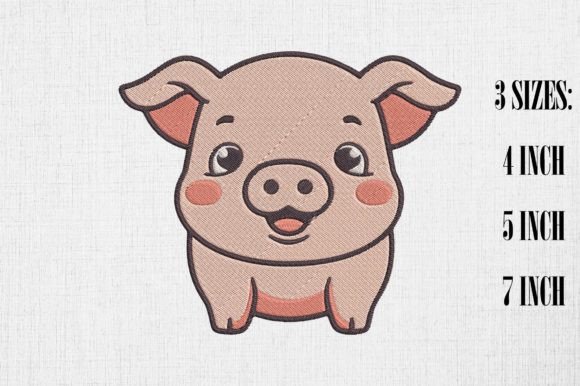
Kawaii Pig Embroidery Design
First Impressions: Sweet, Simple, and Surprisingly Versatile
When I opened the Kawaii Pig Embroidery Design, my first thought wasn’t “cute”—it was “confidently minimal.” This isn’t a cluttered cartoon or an over-rendered mascot. It’s a clean, rounded pig face with soft eyes, a tiny snout, and just enough detail to read as joyful—not saccharine. The proportions are balanced for machine embroidery: no ultra-thin lines that vanish in satin stitch, no microscopic ears that fray on cotton twill. As an embroidery designer who tests dozens of animal motifs each month, I appreciate how this design avoids visual noise while still carrying unmistakable kawaii charm. It feels like something you’d stitch on a baby onesie *and* keep on a linen pillow cover for years—not because it’s trendy, but because it’s quietly timeless.
Real-World Use: From Tote Bags to Tiny Onesies
Last week, I used the Kawaii Pig Embroidery Design to create a set of custom kitchen towels for a local boutique. We stitched it on 100% cotton terry—medium weight, slightly textured—and paired it with pale mint thread on natural linen. The result? Instant warmth. Customers picked up the towels and smiled before they even read the tag. That reaction matters—especially if you’re an Etsy seller or small shop owner building emotional connection through handmade product. The design scaled beautifully across three sizes (3.2”, 4.0”, and 5.1”) without losing clarity. On a sweatshirt, it held its shape through washing and drying. On a curved cap front? I chose the smallest size and added light tear-away stabilizer—no puckering, no distortion. For baby embroidery, I ran it on a onesie using soft cutaway stabilizer and pastel thread; the fill stitch stayed smooth, not stiff, and the satin-stitched outline didn’t snag delicate skin.
Where It Shines—and Where to Pause
The Kawaii Pig Embroidery Design excels in contexts where approachability and gentle personality matter: personalized gifts, nursery decor, boutique aprons, embroidered patches for kids’ backpacks, and holiday embroidery on tea towels or stockings. It reads clearly at 3 inches—even on dark fabric—thanks to thoughtful stitch density and generous spacing between features. That said, I’d avoid using it below 2.5” on stretchy knit t-shirts without testing first. The roundness of the face relies on consistent tension; on highly elastic fabric, slight distortion can blur the snout or flatten the cheeks. Also, skip dense applique layers directly beneath it—like heavy quilted patches—unless you’re willing to adjust underlay stitches manually. And while it works on textured fabrics like burlap or canvas, I recommend reducing top thread tension slightly and using a sharp needle to prevent skipped stitches in tight corners.
Design Notes Every Embroiderer Should Check
- Test on scrap fabric first—especially if stitching on baby clothes or items meant for frequent washing. Thread migration and stabilizer residue behave differently across fiber types.
- Review stitch density before scaling up beyond 5”. Dense fill areas can cause stiffness on lightweight cotton or rayon blends.
- Confirm hoop size compatibility. This design fits comfortably in a 4x4 hoop at its base size—but double-check your file’s included dimensions before loading into your machine.
- Inspect small details in your embroidery software: the inner eye highlights and snout curve hold up well, but zoom in to ensure no stray running stitches or untrimmed jump threads remain in the file.
- Try black-and-white mockups before finalizing listings. The Kawaii Pig Embroidery Design gains quiet sophistication in monochrome—great for minimalist branding or gender-neutral baby collections.
- Use proper stabilizer: medium-weight cutaway for knits, tear-away for stable wovens, and lightweight fusible for delicate linens.
- Verify licensing before selling finished items or bundling the digital embroidery file in craft kits. Since the product description notes commercial use potential, confirm whether personal, small-batch, or unlimited commercial rights apply.
What It Adds to Your Craft Business—Beyond the Stitch
As a designer who consults with Etsy sellers and handmade shop owners, I see how much weight a single embroidery file carries in customer perception. The Kawaii Pig Embroidery Design doesn’t scream “look at me”—it invites touch, pause, and recognition. That builds trust. When someone sees your embroidered tote bag or custom sweatshirt and says, “That pig is so *them*,” you’ve done more than decorate—you’ve communicated. It supports brand consistency without demanding rigid color palettes. You can pair it with earthy tones for a cottagecore line or neon thread for a playful youth apparel collection. And because it’s rooted in the Animals category but filtered through kawaii sensibility, it stands out from generic bear or fox motifs without alienating buyers who prefer subtle charm over bold graphics.
A Final Thought for Creative Entrepreneurs
If you’re choosing embroidery files for real projects—not just inspiration boards—the Kawaii Pig Embroidery Design earns its place in your library because it balances craft integrity with market appeal. It stitches cleanly, photographs well in printable mockups, and translates across product categories without feeling forced. Whether you’re launching a new line of nursery decor, refreshing your holiday embroidery collection, or building digital design assets for other makers, this isn’t filler—it’s functional charm. Just remember: great embroidery starts before the needle drops. Read the file notes, test intentionally, and let the design guide your choices—not the other way around.